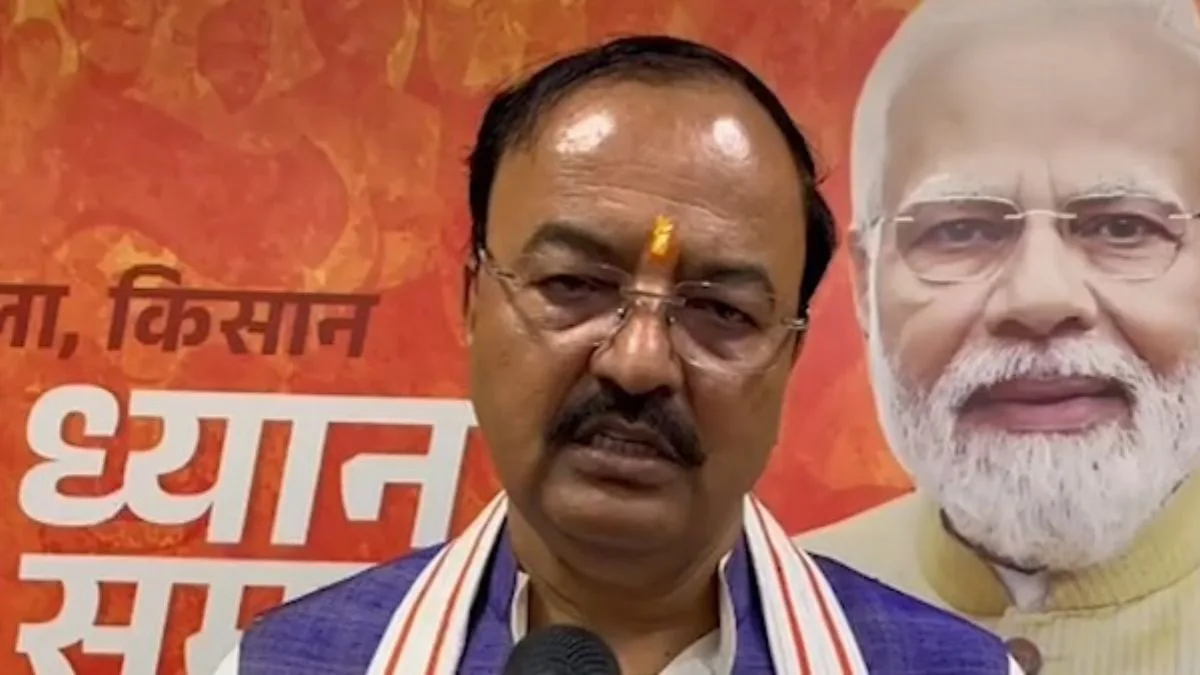
Stating that Lord Ram connects not through distinctions, but emotions, Uttar Pradesh Deputy Chief Minister Keshav Prasad Maurya has said a person’s devotion is important, not his lineage.
In a post on his social media account on Monday, Keshav Prasad Maurya said the new divine Ram Temple is not only a center of devotion and spirituality but is also becoming a symbol of India’s collective strength, cultural upliftment, and social harmony. This complex will inspire the country as a “place of consciousness” for generations to come. “Our Ram connects not through distinctions, but through emotions. A person’s devotion is important, not their lineage.”
Advertisement
The deputy CM further said that the seven temples built in the Ram Temple complex weave together diverse streams of Indian philosophy and folk faith. He specifically mentioned the temple of Mata Shabari, which is a powerful symbol of the tribal society’s tradition of immense love, compassion, and hospitality. Similarly, the temple of Nishadraj preserves the memory of a sacred friendship where the goal and the spirit were given more importance than the means.
He described the presence of Mata Ahalya, Maharishi Valmiki, Maharishi Vashistha, Maharishi Vishwamitra, Maharishi Agastya, and Saint Tulsidas in one place as a unique confluence of the Indian sage tradition, the tradition of knowledge, and the unbroken tradition of devotional literature. He said having the darshan of Ram Lalla along with all these great sages on the same sacred land is a historic and sacred experience in itself.
He also explained that the statues of Jatayu and the squirrel installed in the complex demonstrate the importance of small contributions in achieving even the greatest goals. “The message is very simple: whether small or big, every effort becomes the foundation for accomplishing a great task.”
He said over the past 11 years, the government has placed every section of society — women, Dalits, backward classes, extremely backward classes, tribals, the deprived, farmers, workers, and youth — at the forefront of development. “The resolution of a developed India by 2047 will be realized only when every individual and every sector is empowered.”
Referring to the Dharma Dhwaj , the deputy chief minister said this flag is not merely a formal symbol, but a symbol of the renaissance of Indian civilization. He explained that its saffron colour symbolizes sacrifice, energy, and penance; the glory of the Suryavanshi dynasty inscribed on it and the sound of OM evoke the spiritual power of India. The Kovidar tree symbolizes the virtues and lasting prosperity of Ramrajya.
“This Dharma Dhwaj is a resolution, a success; it is the story of creation through struggle, the embodiment of the saints’ spiritual practice and society’s participation,” he said.
This flag will also inspire that life may be lost but promises should not be broken, and that the primacy of action and duty should become the foundation of the world. He said this flag would also strengthen the spirit that there should be no hatred or fear in society, and that peace, happiness, and harmony should prevail for all.